Showing posts with label Northern Saw-whet Owl. Show all posts

Sunday, September 20, 2015

Late-season Hotspot for Small Mountain Owls

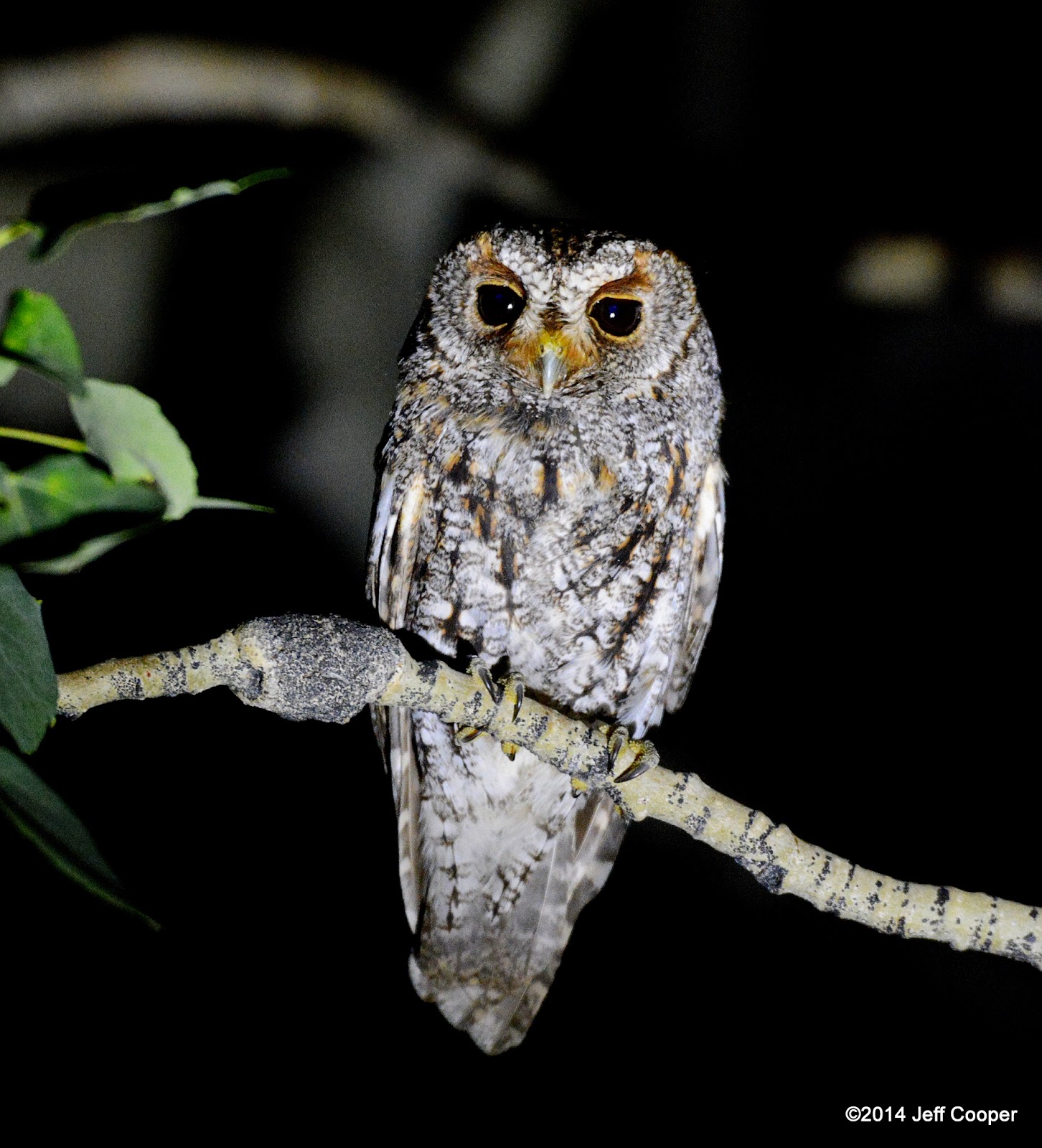
I participated in a work conference at Aspen Grove Family Camp and Conference Center this past Thursday and Friday. Aspen Grove is a mountain resort that is owned by the LDS church and is used for family camps, recreation, and a range of conferences. It is located just up the road from Sundance Ski Resort in Utah County, Utah. The conference I was attending allowed for free time Thursday evening after dark so I drove up the Alpine Loop Road from Aspen Grove to where I thought the habitat was right for Flammulated and Saw-whet Owls. I wanted to see if I could locate owls and then show them to my boss and coworkers. I went searching solo at first because I didn't want to drag away a group of non-birders just so they could watch me stand in the dark making strange sounds. I wanted to have some confidence from finding owls before inviting others to join me.  I knew it was getting late in the season for Flammulated Owls because they typically migrate south to Mexico around the end of August and the beginning of September. I thought it would be an interesting test to see if Flammulated Owls were still in the area so I used an app from my phone to produce a Flammulated Owl call. I heard an owl call back to me after a couple of brief attempts with the app. The owl was calling from some aspen trees on the hillside below me. A few minutes later I heard an owl responding from the tree behind me. I moved parallel to the tree while staying on the road to triangulate and pinpoint the location from which the owl was calling. Once I honed in on the right location I put a light on it and found this cool little bird which is about seven inches long from head to tip of tail. For what it's worth the Flammulated Owl is the only small owl in North America with dark irises.

Flammulated Owl in Utah County, UT USA
After finding the Flammulated Owl and hearing a second one I decided to conduct another test. I tried to call out a Northern Saw-whet Owl using my own whistling call.  These owls aren't as vocal or responsive to calling after they've completed their breeding season so this would be another challenge on most occasions this late in the year. Luck was on my side again, however, and I had two Saw-whets responding to my calls within minutes. I used the same triangulation process to pinpoint the location of one owl and then put a light on the spot to reveal this cool little guy. The Northern Saw-whet, about eight inches tall, is my favorite species of owl. I like the following image because it includes both deciduous (an aspen in this case) and conifer trees, the preferred habitat for both Flammulated and Saw-whet owls.

Northern Saw-whet Owl in Utah County, UT USA
I believe the following images are of a second owl. The first owl showed a light tip on the upper bill. This one has a solid dark bill all the way to the tip. This Saw-whet flew into and began calling from a nearby tree so I spent a few minutes photographing it as it alternated between watching me and looking in other directions.

Northern Saw-whet Owl in Utah County, UT USA
It is always interesting to watch owls twist their heads so freely. I captured the image below after the owl had turned its head 180 degrees to observe something behind its location.

Northern Saw-whet Owl in Utah County, UT USA
As I was getting back into my truck I heard an owl begin calling from the other side of my truck. This one was at eye level and did not flush as I moved around to the other side of my truck for a very close look. The focused look on the face of the owl below captured the curiosity this bird had in the whistling call I was making.

Northern Saw-whet Owl in Utah County, UT USA
After a brief interaction with both species of owl I went back down to the conference center and invited my boss and some coworkers to return to the location with me. I was able to call in and point out a handsome Saw-whet owl for them. They were thrilled to have such a unique experience with a curious little owl. It was fun to hear them puzzle over how I was able to find the owl for them.

Sunday, July 5, 2015

We Finally Saw-whet! I mean Saw It!

Last Friday evening I led a small group of bird and owl enthusiasts to some of the higher elevations of Utah's Wasatch Mountains.  One out-of-state birder had high hopes of seeing her first Flammulated Owl. That is a small mountain species of owl that many birders from around the United States and other parts of the world want to see when they visit Utah. Flammies, as some affectionately call them, are common for us locally during the spring and summer months because they come from Mexico to breed in our mountains so it is always fun to introduce others to them. One of the local birders who joined our small group had high hopes of seeing a Saw-whet Owl in the wild. I had one of my sons join us and he also had hopes of seeing his first Saw-whet.

Saw-whets are vocal during their breeding season, but they move about more silently in the dark after breeding season slows down. Consequently, this time of year is not ideal for locating Saw-whets. I was very confident we'd locate a Flammulated Owl so I spent most of my efforts locating a Saw-whet during the trip last Friday. We found our first of several Flammulated Owls rather quickly, but the Saw-whets were playing hard to get until our third and final stop and right up until just before we were about to call it a night. Our persistence paid off after we heard an adult give a call and then at least two juveniles calling back to the adult. One juvenile called long enough that I was able to locate it and put a light on it so everyone could enjoy its cute/awesomeness. The little owl was quite accommodating so I decided to capture a few images after others were able to enjoy excellent, close-range views.

Recently-fledged, Juvenile Northern Saw-whet Owl in Utah County, UT USA
Top/Back Side of Recently-fledged, Juvenile Northern Saw-whet Owl in Utah County, UT USA
Here's an image of an adult I found on a solo trip several weeks ago to illustrate how much the plumage changes between the juvenile and adult ages of the species. The branch in the foreground is unfortunate from a photographic perspective, but it's also very natural.

Adult Northern Saw-whet Owl in Utah County, UT USA

Saturday, March 14, 2015

Owling the Outskirts of a Tiny Town on Friday the 13th

Great Horned Owl Giving a Hoot

I love looking for owls, especially Northern Saw-whet Owls, near the summit of the Alpine Loop where stretches of road from Utah and Wasatch Counties rise to meet at nearly 8000 feet. The roads that allow access to the summit are closed during the winter months and generally reopen each sprint around Memorial Day weekend. Consequently, I've been left only to dream of what the Saw-whet Owls are doing up there in the early spring months as their breeding season goes into full swing. Recently I was told there was a way to drive my truck up into that area from the Wasatch County side. The Utah winter has been extremely mild with very little snow so I decided to give it a shot last night with my friend Eric Peterson. Eric and I most recently had owling success during our Presidents' Day weekend excursion to Southeast Arizona. You can read about and see images from that fun-filled weekend trip in my most recent blog posts.

Last night we enjoyed the beautiful scenery of Provo Canyon and Deer Creek Reservoir back-dropped by the majestic snow-capped peaks of Mount Timpanogos as we made a 40-minute drive from our homes in Utah County to Heber Valley in Wasatch County. I asked Eric if he'd be interested in checking for Great Horned Owls along the way. He was certainly interested so we made a stop on the outskirts of the small town of Midway, Utah where I'd located a Great Horned Owl roost a few years before.

We employed some simple owling techniques to locate not one but two Great Horned Owls. We suspect they are a breeding pair. We searched below some dense conifers for evidence of an active roost. We discovered pellets, remains of prey, and feathers. The ground below one particular tree was littered with pellets. I wondered what DNA might be found in those pellets. No doubt bits of mammals we in them.


Although we had loads of evidence pointing to one particular tree it was the call of a male we heard from another tree that let us know for sure we were on the trail to a Great Horned Owl. Eric located a pair of rabbit ears that certainly wouldn't help any TV get better reception.


These owls are meat eaters and rabbits provide lots of meat, especially for a nest of hungry little owlets. Apparently even these dominant owls experience threats from nature. The feathers below appear to be Great Horned Owl feathers that were aggressively removed since several are stuck together at the base. It's possible they belong to another species of bird that became prey to the owls, but they appear to match Great Horned Owl feathers as far as I can tell. The natural process of molting would result in individual rather than batches of feathers being lost.


Once we heard the male calling just before the sun was going down we moved in its direction. It was coming from an evergreen that was very tall and heavily covered. I've put the owl dead center in the cropped image below to make it easier to see while also providing a since of how deeply hidden the owl was in the tree.


Here's another image from a slightly different angle that is more heavily cropped for a closer view.


The owl flew from the tree and over our heads. The sun had dropped behind the mountains so the lighting was very poor, but I managed to lighten up the image below to show some of the detail of the owl. The owl was merely a dark silhouette straight out of the camera so I'm pleased with how digital technology allowed me to reveal the hidden details of the original image.


We heard the female engage in the calling at one point so we think we know where she is on a well-hidden nest, but it was the male that put on a show for us as he flew from one perch to another.


I did my best to hold the lens still as I attempted to capture two short video and audio clips of the owl hooting. I had my tripod/monopod in the truck and it would have improved the steadiness of the video, but I opted to go handheld since we were quickly losing light. Be sure to watch the video in HD for the best image quality.


Our last look at the owl before we resumed our drive into the mountains for the Saw-whets was a silhouette high atop a distant tree. What looks like a tiny owl from this perspective is a bird that is on its way to imposing death and destruction on unsuspecting mammals.


We finally reached the road that was to take us into Saw-whet territory from Soldier Hollow, but it was closed to vehicles. Determined to find our owls, we decided to check another road that would lead to great Saw-whet habitat and made our way there. That road was closed as well. We decided to drive up a third canyon road get into higher elevations. Fortune was on our side with our third option so we pressed onward and upward. The pavement transitioned to mud and rocks and the mud and rocks gave way to snow pack. I engaged the 4WD and pressed forward to where we would find perfect Saw-whet habitat, a mix of conifers and aspens.

We made our first stop and attempted to whistle and call for Saw-whets. We could hear that someone was on the dark and treacherous road ahead of us. There was no way to park on the side of the road due to the narrowness of the road and the deep snow covering the sloping edges so we simply stayed in the middle of the road hoping no one would need to pass us on their way down. Within a few minutes a Saw-whet responded to us and a tiny dark figure flew right by our heads. It landed in a short aspen on the side of the road and began interacting with us. Moments later it moved to a conifer where it posed for some photos. I never get tired of seeing these 8-inches-tall carnivores.


As we were photographing the owl a man with a shovel came walking up the road. He'd parked his truck below where the snow pack began and was on his way up to help dig his son's truck from the snow. Apparently the people we heard above us were stuck. We offered help and then decided we'd back the truck down from our location rather than attempt to go forward. We found a place to do about an 8-point turn. Eric guided me from outside the truck to make sure I didn't get too close to the edge of a drop off and deeper snow. Once we completed that careful maneuver we began a slow decent to another spot that appeared ideal for Saw-whets. We hit another jackpot at our second stop with our second Saw-whet of the evening. We were now three for three on owling targets for the evening.  The second Saw-whet allowed us to watch and listen to it call for several minutes before we decided to continue our way down from the mountain.

About sixty minutes and a late-night, semi-decent, fast food combo meal later we were back to our homes from a memorable evening with owls on the outskirts of a tiny town called Midway.

Saturday, January 31, 2015

Can't Sleep? Go Look For Owls

I had the chance to sleep in this morning, but my internal clock didn't care that it was Saturday. I tossed in bed a bit and then decided to use the early morning hours to look for an owl species I hadn't seen since last summer. While my most normal people were sleeping in their warm beds I drove to a nearby canyon and began to call for a Northern Saw-whet Owl. The area was perfect habitat for the species, but I wondered if the mild northern Utah winter allowed the tiny owls to stay higher in the mountains. I was delighted when a Saw-whet responded almost immediately to my call. Standing alone in the dark I looked in the direction of the call. I saw the silhouette of the owl as it flew across the moonlit sky above me. I followed the silhouette and relocated the owl as it gave its "toot, toot, toot..." call from its perch slightly down the hillside from me. I quietly moved down the hillside until I was able to see the silhouette on a large branch above me.


Saw-whets are about eight inches tall and are strictly nocturnal. They feed most actively just after dark and just before dawn. Knowing that Saw-whets are meat eaters I began to wonder if Screech-owls and Saw-whets shared territories. I wondered about this because Screech-owls are about the same size and also eat meat. My brief wondering came to an end when I heard a Screech-owl start calling from some trees just twenty feet away from where I just encountered the Saw-whet. I focused my attention on Screech-owl and listened to it call for several minutes.

I didn't get a photo of the Screech-owl this morning, but I did capture an image of a Screech-owl in the same area a month or so ago. The Screech-owl was a bit more camera friendly and allowed a much closer approach.


As I was about to leave the area to head home I heard the faint call of a Great Horned Owl coming down from the hillside up the canyon above me. I walked up the canyon to get closer to the owl. I then realized that a pair of owls were calling to each other. It is mating season, after all, for the Great Horned Owls. I was feeling quite fortunate after encountering three owl species within an hour, an hour during which most normal people in the state of Utah were sleeping.

Thursday, July 17, 2014

Fireworks, The Moon, Owls, a Snake, And Sunsets

Birding is often slow during July and this year is no exception. When the birding gets slow, however, I turn to other opportunities to explore and enjoy outdoor activities.

The 4th of July is a fun holiday for our family. This year I made my first real attempt at photographing fireworks. The show was free to the public and held at Thanksgiving Point in Lehi, Utah. I read that I should use a long lens (at least 200mm) for fireworks so I took my 80-400mm lens. Once the fireworks started I realized I needed to back away from the action even with the lens pulled back to 80mm. I moved back as far as I could and I was still unable to fit complete firework blasts inside the camera frame.  I was pleased with the results.


I heard we had a super moon approaching so I set up my camera on a tripod in my driveway the night before the super moon and practiced capturing night images. The moon looked like a pearl cradled in the clouds the night before the peak of the super moon.

The Night Before the July 2014 Super Moon (Seen from Pleasant Grove, UT)
I enjoyed capturing images of the super moon the night it peaked. Again, I was in my driveway so the glow of the city lights impacted the overall results. I learned a bit about photographing the moon and was wishing I was high in the darkness of our local mountains.

Super Moon Seen From Pleasant Grove, UT
The night after the super moon I made my way up into our local mountains via American Fork Canyon. I found a place to park and set up my gear. It was at 8000 ft and near the summit of the Alpine Loop (Hwy 92). The detail of the craters on the moon was better than the night before, but it was a waning, or not-so super, moon.

The Night After the July 2014 Super Moon (The waning, or not-so super, moon)
Before capturing images of the moon that night I spent some time whistling for a Northern Saw-whet Owl. I've learned some tricks for calling these owls in that include taking advantage of a very short window at a certain level of darkness and the type and order of the whistling sounds I make. I was successful at whistling in an owl before the moon rose above the horizon, but I wasn't able to capture an image. It was a skittish little owl. The image below is of an owl I whistled in previously at the same location.

Northern Saw-whet Owl Wasatch County, UT
Flammulated Owls breed in our mountains during the summer months so I called one of those in as well. These owls are much more cooperative with being photographed. These owls will migrate down to Mexico and beyond once they finish breeding and their young have become adept at hunting and flying.

Flammulated Owl in Wasatch County, UT
I've been riding my mountain bike along the Murdock Canal in the early evening hours recently. I watch for birds and other critters, especially, Rattlesnakes as I ride along that trail. It runs along the foothills so snakes often come down to the trail where the asphalt and gravel are warm. The other night a ran across a new species of snake. I'm not sure I've ever seen one before, but I wasn't surprised when I looked in up in my reptile guide and discovered it was a subspecies of Racer. I managed a few images, but once it decided to leave my presence is moved faster than any snake I've ever seen.

Western (Yellow-bellied) Racer in Cedar Hills, UT
Sunsets in July can be quite spectacular. I always enjoy watching a sunset unfold because you never know what to expect. If there are clouds in the sky and on the horizon they can often be painted in a variety of colors by the light from the lowering sun.

Summer Sunset Seen from American Fork, UT