Showing posts with label Flammulated Owl. Show all posts

Saturday, October 3, 2020

Northern Breeders Passing Through: Flammulated Owls in Utah County


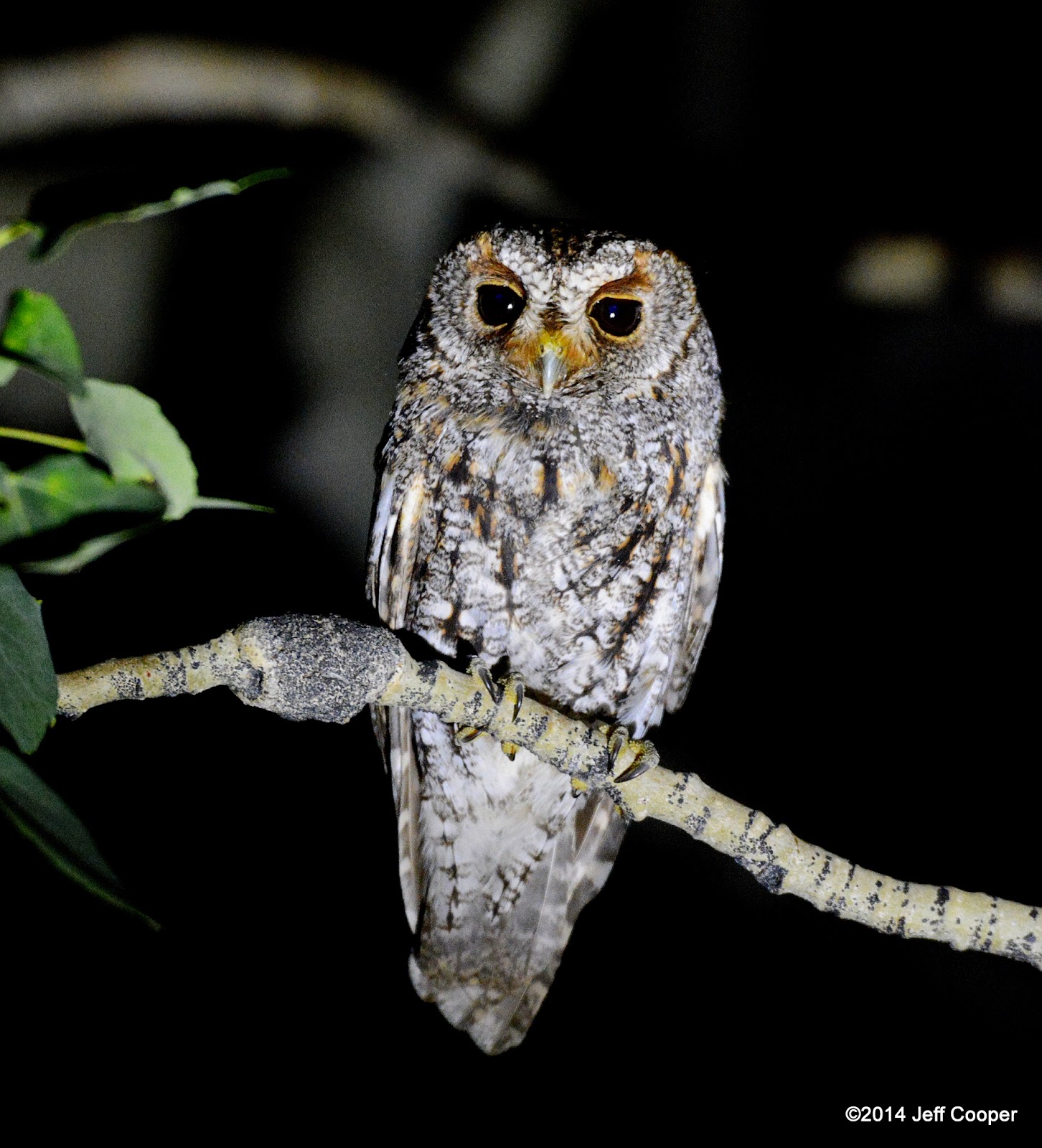
Flammulated Owl in Utah County, Utah
October 1, 2020

It's been more than two years since my last post. I got lazy and posted images and short blurbs about my nature encounters on Instagram and Facebook. That approach of sharing is okay, but it feels incomplete. Blogging takes more thought and time, but it also allows me to share more of the experiences behind the images. "The image" is the product of an experience and can memorialize great experiences, but the process of experience is where I personally find value. I enjoy learning and sharing what I learn along with my photos and blogging is, in my humble opinion, a better way to do that. So I'm returning to what I enjoy.  I hope you learn from and enjoy what I share.

If I would have consistently listened to my inner child I would be working in nature. I thought it sounded very dignified to be a herpetologist or ornithologist when I first heard and then tried to pronounce those words as a young teenager. Holding a field guide for reptiles and amphibians or birds fed my appetite for finding and learning about the animals on our planet. I wanted to explore, discover, and learn all I could about animals. Mutual of Omaha's Wild Kingdom was my favorite TV show in the late 1960s and early 70s and I would often pull out pencil and paper, and sometimes crayons, to draw and color birds that I noticed while out playing in the yard or the fields, hills, and forests of Kentucky.

Well, the inner child is still alive and has manifested itself this summer by driving me, pun intended, to our mountains to monitor the presence of Flammulated Owls in Utah County. I can be inside prime breeding habitat for Flammulated Owls, a montane mix of conifer and deciduous trees, with a 20-minute drive up our local canyon. I've enjoyed introducing some new birders and a few photographers to this little-known owl species this summer and fall, but I've also been making a point over the past month to check every few nights to see if I can hear or see one of them because I want to know how late in the season their presence can be confirmed in our local mountains.

Prior to this season, the latest encounter I had with a Flammulated Owl was September 23rd. So far this season I've confirmed their presence as of October 1st. Chances are that the local breeders I observed during the summer, and their young, have left the county and are already on their way to wintering grounds in places like Mexico. The birds I've recently observed are most likely passing through as they migrate south from the upper edges of their breeding range, which extends as far north as the montane forests in southern Alberta, Canada. I'll go out a few more times over the next week or two until I am unable to see one or at least hear the soft toots of one of the migratory stragglers.

Be curious and maintain natural spaces for the other creatures that inhabit our amazing planet.

Flammulated Owl in Utah County, Utah
October 1, 2020

This Flammulated Owl displays the flame-like feathers for which it is named.
Utah County, Utah August 1, 2020

Flammulated Owl in Utah County, Utah
September 5, 2020

Resources for learning more about Flammulated Owls:

https://www.allaboutbirds.org/guide/Flammulated_Owl

https://www.audubon.org/field-guide/bird/flammulated-owl


Sunday, September 20, 2015

Late-season Hotspot for Small Mountain Owls

I participated in a work conference at Aspen Grove Family Camp and Conference Center this past Thursday and Friday. Aspen Grove is a mountain resort that is owned by the LDS church and is used for family camps, recreation, and a range of conferences. It is located just up the road from Sundance Ski Resort in Utah County, Utah. The conference I was attending allowed for free time Thursday evening after dark so I drove up the Alpine Loop Road from Aspen Grove to where I thought the habitat was right for Flammulated and Saw-whet Owls. I wanted to see if I could locate owls and then show them to my boss and coworkers. I went searching solo at first because I didn't want to drag away a group of non-birders just so they could watch me stand in the dark making strange sounds. I wanted to have some confidence from finding owls before inviting others to join me.  I knew it was getting late in the season for Flammulated Owls because they typically migrate south to Mexico around the end of August and the beginning of September. I thought it would be an interesting test to see if Flammulated Owls were still in the area so I used an app from my phone to produce a Flammulated Owl call. I heard an owl call back to me after a couple of brief attempts with the app. The owl was calling from some aspen trees on the hillside below me. A few minutes later I heard an owl responding from the tree behind me. I moved parallel to the tree while staying on the road to triangulate and pinpoint the location from which the owl was calling. Once I honed in on the right location I put a light on it and found this cool little bird which is about seven inches long from head to tip of tail. For what it's worth the Flammulated Owl is the only small owl in North America with dark irises.

Flammulated Owl in Utah County, UT USA
After finding the Flammulated Owl and hearing a second one I decided to conduct another test. I tried to call out a Northern Saw-whet Owl using my own whistling call.  These owls aren't as vocal or responsive to calling after they've completed their breeding season so this would be another challenge on most occasions this late in the year. Luck was on my side again, however, and I had two Saw-whets responding to my calls within minutes. I used the same triangulation process to pinpoint the location of one owl and then put a light on the spot to reveal this cool little guy. The Northern Saw-whet, about eight inches tall, is my favorite species of owl. I like the following image because it includes both deciduous (an aspen in this case) and conifer trees, the preferred habitat for both Flammulated and Saw-whet owls.

Northern Saw-whet Owl in Utah County, UT USA
I believe the following images are of a second owl. The first owl showed a light tip on the upper bill. This one has a solid dark bill all the way to the tip. This Saw-whet flew into and began calling from a nearby tree so I spent a few minutes photographing it as it alternated between watching me and looking in other directions.

Northern Saw-whet Owl in Utah County, UT USA
It is always interesting to watch owls twist their heads so freely. I captured the image below after the owl had turned its head 180 degrees to observe something behind its location.

Northern Saw-whet Owl in Utah County, UT USA
As I was getting back into my truck I heard an owl begin calling from the other side of my truck. This one was at eye level and did not flush as I moved around to the other side of my truck for a very close look. The focused look on the face of the owl below captured the curiosity this bird had in the whistling call I was making.

Northern Saw-whet Owl in Utah County, UT USA
After a brief interaction with both species of owl I went back down to the conference center and invited my boss and some coworkers to return to the location with me. I was able to call in and point out a handsome Saw-whet owl for them. They were thrilled to have such a unique experience with a curious little owl. It was fun to hear them puzzle over how I was able to find the owl for them.

Thursday, July 17, 2014

Fireworks, The Moon, Owls, a Snake, And Sunsets

Birding is often slow during July and this year is no exception. When the birding gets slow, however, I turn to other opportunities to explore and enjoy outdoor activities.

The 4th of July is a fun holiday for our family. This year I made my first real attempt at photographing fireworks. The show was free to the public and held at Thanksgiving Point in Lehi, Utah. I read that I should use a long lens (at least 200mm) for fireworks so I took my 80-400mm lens. Once the fireworks started I realized I needed to back away from the action even with the lens pulled back to 80mm. I moved back as far as I could and I was still unable to fit complete firework blasts inside the camera frame.  I was pleased with the results.


I heard we had a super moon approaching so I set up my camera on a tripod in my driveway the night before the super moon and practiced capturing night images. The moon looked like a pearl cradled in the clouds the night before the peak of the super moon.

The Night Before the July 2014 Super Moon (Seen from Pleasant Grove, UT)
I enjoyed capturing images of the super moon the night it peaked. Again, I was in my driveway so the glow of the city lights impacted the overall results. I learned a bit about photographing the moon and was wishing I was high in the darkness of our local mountains.

Super Moon Seen From Pleasant Grove, UT
The night after the super moon I made my way up into our local mountains via American Fork Canyon. I found a place to park and set up my gear. It was at 8000 ft and near the summit of the Alpine Loop (Hwy 92). The detail of the craters on the moon was better than the night before, but it was a waning, or not-so super, moon.

The Night After the July 2014 Super Moon (The waning, or not-so super, moon)
Before capturing images of the moon that night I spent some time whistling for a Northern Saw-whet Owl. I've learned some tricks for calling these owls in that include taking advantage of a very short window at a certain level of darkness and the type and order of the whistling sounds I make. I was successful at whistling in an owl before the moon rose above the horizon, but I wasn't able to capture an image. It was a skittish little owl. The image below is of an owl I whistled in previously at the same location.

Northern Saw-whet Owl Wasatch County, UT
Flammulated Owls breed in our mountains during the summer months so I called one of those in as well. These owls are much more cooperative with being photographed. These owls will migrate down to Mexico and beyond once they finish breeding and their young have become adept at hunting and flying.

Flammulated Owl in Wasatch County, UT
I've been riding my mountain bike along the Murdock Canal in the early evening hours recently. I watch for birds and other critters, especially, Rattlesnakes as I ride along that trail. It runs along the foothills so snakes often come down to the trail where the asphalt and gravel are warm. The other night a ran across a new species of snake. I'm not sure I've ever seen one before, but I wasn't surprised when I looked in up in my reptile guide and discovered it was a subspecies of Racer. I managed a few images, but once it decided to leave my presence is moved faster than any snake I've ever seen.

Western (Yellow-bellied) Racer in Cedar Hills, UT
Sunsets in July can be quite spectacular. I always enjoy watching a sunset unfold because you never know what to expect. If there are clouds in the sky and on the horizon they can often be painted in a variety of colors by the light from the lowering sun.

Summer Sunset Seen from American Fork, UT

Thursday, December 20, 2012

Test Your Knowledge of North American Owls

Great Horned Owl at Garr Ranch
Antelope Island State Park Davis County, UT
(Photo by Jeff Cooper)
Owls are mysterious birds because many people know they exist yet few people have seen or understand much about them. Most people I know are familiar with large owls such as Great Horned and Barn Owl, but they have no idea that a number of small owls exist around them.
Barn Owl on Provo Airport Dike Provo, UT
(Photo by Jeff Cooper)
I will pose some questions as a fun little test of your knowledge of North American Owls in this post, but let me start with a recent experience I had with owls and a non-birder who shares property with a pair of owls. I participated in one of the annual Audubon Christmas Bird Counts last Saturday (12/15/12) by counting bird species in a small area of the Provo Christmas Bird Count. I started before sunrise to include nocturnal birding in my census. I wanted to see if I could locate a Great Horned Owl, Western Screech Owl, and Barn Owl. Despite snowfall, I was able to locate a Great Horned Owl hunting from a tree-top perch within five minutes of starting my census. I saw the silhouette of the tell-tale signs of the Great Horned Owl, two ear tufts and a bulky body. An hour and a half later as the sun began to rise I was still trying to find a Screech Owl and a Barn Owl. Once the sun came up I knew I was not likely to find a Screech Owl because they are strictly nocturnal and very secretive. However, I knew of some abandoned silos and farm buildings in my count area so I knocked on a few doors to obtain permission from property owners to check their buildings. I spoke with one lady and let her know I was doing a bird census for the Audubon Society and that I suspected she may have Barn Owls based on the abandoned buildings and silos near agricultural fields (preferred habitat and hunting areas for Barn Owls). She said, "I don't know if we have Barn Owls, but we have heard some Screech Owls." I suspected that what she was really hearing was the territorial scream (or screech) of Barn Owls. A few minutes into my search of the buildings I found what I was hoping for, an abundance of wash (white excrement) often found beneath an owl roost. I peeked up the shoot of the silo and saw a pair of Barn Owls. Both turned to look down at me and I was able to see the tawny color of the female's face next to her mate's much whiter face. I love following the clues that lead to such discoveries.

Now to the test. Here are a few questions to check your knowledge of North American Owls. I'll present the answers as I have them from one of my favorite books on owls, Owls of the United States and Canada by Wayne Lynch, at the end of the post (after the images).

1. How many species of owl are recognized in North America?
2. Which four species have dark, rather than yellow, eyes?
3. How many species of Screech Owl can be found in North America?
4. Which is the heaviest owl in North America?
5. Which species has the longest tail relative to its body size and hunts mainly during the day?
6. Which North American species is the smallest owl in the world?
7. Name the species for some of our smaller owls presented below.

This owl was photographed in the mountains of Utah during the summer. It is just under 7 inches tall.


This owl often perches conspicuously and hunts during the day. It was photographed in Provo Canyon in Utah. It is just under 7 inches tall.


This owl was photographed in the mountains of northern Utah in the early summer months. It is about 8 inches tall.


This owl was photographed in the desert just outside of Mesa, AZ at the end of April. It is just under 6 inches tall.


This owl was photographed in Pleasant Grove, UT. It is about 8.5 inches tall.


Answers:
1. 19 Species
2. Barn Owl, Barred Owl, Spotted Owl, Flammulated Owl
3. Western, Eastern, and Whiskered Screech Owls
4. Snowy Owl (the females in particular)
5. Northern Hawk Owl
6. Elf Owl
7. Images from top Flammulated Owl, Northern Pygmy Owl, immature Northern Saw-whet Owl, Elf Owl, Western Screech Owl