Saturday, March 3, 2018

Looking for Lifers: Rio Grande Valley Day 2

Day 2

Santa Ana National Wildlife Refuge

Santa Ana NWR was our first planned stop for our second day in South Texas, but we noticed our first group of Roseate Spoonbills (lifer) in a small pond behind a neighborhood on our way to Santa Ana. We passed by that small group thinking we'd see lots of them as we moved toward South Padre Island later in the day. Moments later we drove by a little park where a lone spoonbill was foraging near a storm drain so we stopped to observe it. It's not idyllic, but I'm glad I captured the image below because it turned out to be the last opportunity we had to photograph a spoonbill for the rest of our trip.


Santa Ana National Wildlife Refuge

We arrived at Santa Ana just after nine. Eric heard a White-eyed Vireo calling as we got out of the van so we walked across the empty parking lot to locate the bird and capture some images. We rarely get a vagrant White-eyed Vireos in Utah. In fact, they are rare enough that I've yet to see one despite years of birding in Utah.  I enjoyed spending a few minutes photographing this one and observing the cool white eyes. These little guys are about five inches long from head to tip of tail.

White-eyed Vireo Santa Ana National Wildlife Refuge

White-eyed Vireo Santa Ana National Wildlife Refuge
A large female Cooper's Hawk was trying to make breakfast of some of the birds near the visitor center.  It attempted to take prey with a couple of dives while we were watching. Each time the hawk came up with empty talons.

These phone images are an attempt to capture the habitat we explored in Santa Ana and to show the Spanish moss that I thought was pretty cool to see hanging from the trees.


That's Eric just about to veer left and approach the pond where we had our first encounter with Least Grebes.


The Least Grebe is the smallest of the grebe family. These aquatic birds are about nine inches long and weigh about 4 ounces. They appeared to me to be buoyant fluff balls that could have fit in the palm of my hand.

Least Grebe Santa Ana NWR

Other aquatic birds we observed in and around the pond included Blue-winged Teals, Cinnamon Teals, Green-winged Teals, Northern Shovelers, Gadwalls, Nothern Pintails, Coots, Killdeers, and Long-billed Dowitchers. We didn't have a scope with us so I'm sure we overlooked a few shorebirds.

Walking farther around the marsh-encircled pond and into the woods we observed Harris's Hawks, Common Yellowthroats, Blue-gray Gnatcatchers, Green Jays, and some other common species. In addition to Bewick's Wren we happened upon this cute little Winter Wren. I entered this sighting into eBird on my phone and realized it was considered rare for the area. I always attempt to capture images of rare bird sightings to help document them for others to review.

Vagrant Winter Wren Santa Ana NWR
Although we had heard and seen numerous Olive Sparrows during our first day in Texas this was my first attempt at photographing one. I wanted to make sure the field mark for which it is named appeared in the image, the olive coloring in the wing and tail feathers.

Olive Sparrow Santa Ana NWR
I noticed my first White-tipped Dove (lifer) while photographing some Harris's Hawks in the woods below the levy. Unfortunately, the only photo I managed of a White-tipped Dove was a phone capture of a dead one the day before.

It was a pleasant walk around Santa Ana, but we had some other target birds we wanted to see so we finished our visit by visiting with some park employees on our way back to the van.

Edinburg Scenic Wetlands World Birding Center

Upon leaving Santa Ana we went looking for our second Kingfisher target, the Green Kingfisher. We checked the Birdseye app on our phones for recent sightings and decided to head over to Edinburg Scenic Wetlands. That decision turned out to be little birding jackpot because we found a pair of Green Kingfishers (lifer) and three other life birds for me--Mottled Duck (lifer), Yellow-crowned Night-Heron (lifer), and Blue-headed Vireo (lifer).

The Green Kingfisher is North America's smallest kingfisher at a little less than nine inches long and weighing about 1.3 ounces. The first image shows the front side of the colorful male and the second image shows the topside of the less colorful female.

Male Green Kingfisher Edinburg Scenic Wetlands WBC

Female Green Kingfisher Edinburg Scenic Wetlands WBC
I'm glad I stopped and took some time to photograph a rather dull-looking pair of Mottled Ducks because I ended up discovering my lifer Yellow Crowned Night-Heron in the same location.

The male Mottled Duck has an all-yellow bill while the bill of a female is typically a mix of olive and orange coloring. There is a distinct transition in plumage between the mottled body and the pale and rather unmarked neck of these birds when compared with similar looking, and more common, female mallards.

Male Mottled Duck Edinburg Scenic Wetlands WBC

Female Mottled Duck Edinburg Scenic Wetlands WBC
I was delighted to have this Yellow-crowned Night-Heron calmly pose for me once I managed to find a direct view through the tangle of branches surrounding the bird.

Yellow-crowned Night-Heron Edinburg Scenic Wetlands WBC

After pointing Eric to the heron I walked down a nearby path where I discovered a Black-and-white Warbler and a Blue-headed Vireo. Once again both birds proved difficult to photograph because of their hyperactive movements while foraging deep inside a branch-riddled tree. Other than a nice shot of the vent and undertail area, the Black-and-white Warbler evaded my attempts to photograph it. The Blue-headed Vireo did cooperate as long as I was willing to accept lots of branch clutter in the images. Cassin's Vireos are very similar in appearance to the Blue-headed and we see the Cassin's in Utah during migration. However, the Blue-headed shows a stronger contrast between the white throat and the so-called blue head or cap that wraps down to the sides of the neck. Blue-headed Vireos also show an olive color on the back as well as brighter and fuller yellowing on the sides. The Blue-headed actually winters in south Texas while the Cassin's does not. So, I used the range maps to help identify this one as well.

Blue-headed Vireo Edinburg Scenic Wetlands WBC

Blue-headed Vireo Edinburg Scenic Wetlands WBC

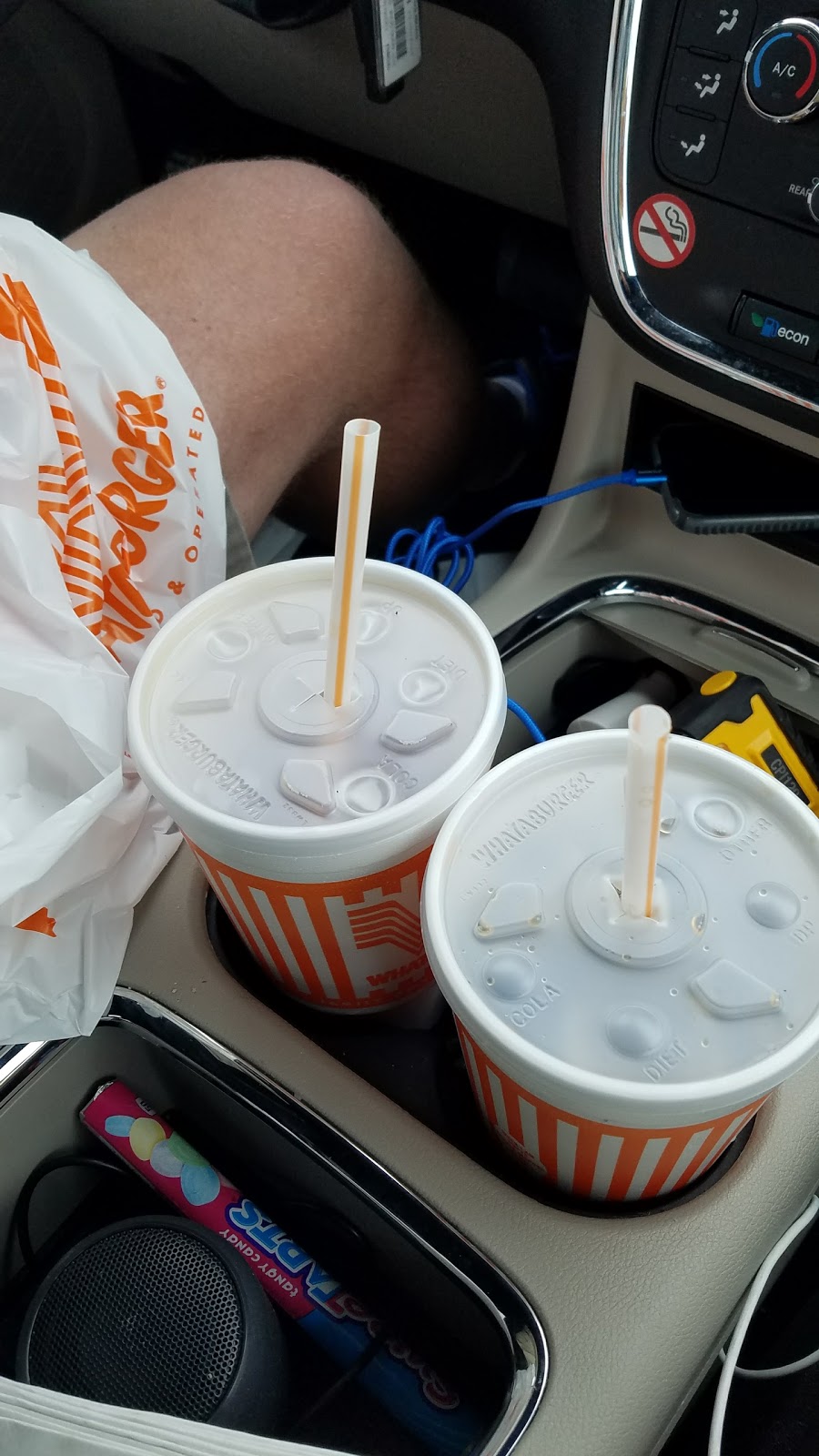
It seemed that you couldn't put on a blindfold and swing a stick without hitting a Whataburger in South Texas so we decided to give it a try for lunch. It's another tradition for Eric and me is to try something local when we visit places. Friends from Texas asked if I went to Whataburger so here's an image for proof, less the actual burger. I'm not sure why I forgot that part, but I promise we did not simply plant the bag and cups in the vehicle for the image. The burger was good.


Sabal Palm Sanctuary

I had looked forward to birding Sabal Palm based on my research and the possibility of seeing a number of life birds. I had also heard good things about Sabal Palm from a herping perspective. However, the birds were quiet, mud was everywhere, and no reptiles were observed in the cooler-than-usual weather.  The image below shows numerous sabal palms for which the sanctuary is named.


One of the blinds we checked out as we walked around the park was extremely quiet. However, we did locate a Least Flycatcher in the trees next to this blind.


The mud would build up on the soles of our shoes and then eventually fall off under its own weight along the way.


This overlook at Sabal Palm gave us a view to Mexico on the other side of the Rio Grande.


We did have some success photographing another Buff-bellied Hummingbird near the visitor center as we were leaving the sanctuary. The lighting was tough again so most of the images turned out pretty grainy as a result of high ISO.

Buff-bellied Hummingbird Sabal Palm Sancturary Texas
I captured this image on the way out of the sanctuary. Sabal Palm, where we birded, was positioned between this man-made border wall and the actual border, the Rio Grande River. A Border Patrol agent was manning the vehicle seen behind the left side of this image.

Border Wall at Entrance to Sabal Palm Sanctuary Texas
Our list of birds from the sanctuary turned out to be very short during our brief visit. We ended up with twelve species. I guess the conditions and timing were poor, because my initial research of birds seen in the sanctuary, prior to our visit, essentially promised about 15 life birds. I'm sure it could have been quite productive on a better day weather-wise.

We left Sabal Palm and began our drive toward South Padre Island, our final destination for the day. The island was covered in fog so we decided to locate and check into a hotel and find some dinner. We chose to follow a tip from one of Eric's friends and went to dinner at Dirty Al's.


There were lots of options for seafood, but I decided to try some fish tacos after sharing a shrimp appetizer. I'm always curious to see how fish tacos differ from one restaurant to another.


The tacos ended up on tortillas much larger than expected. I probably would have been satisfied with a single taco after enjoying the appetizer. The food was good and the hosts and servers were pleasant and friendly.

We were looking forward to our third day because we were going to start at the South Padre Island Convention Center and then search for an Aplomado Falcon, one of the few raptors of North America neither one of us had ever observed.

Friday, March 2, 2018

Looking for Lifers: Rio Grande Valley Day 1

The Impetus for the Trip

My buddy Eric contacted me early in January to let me know he was going to fly to Austin in February to do a Working Aptitude Evaluation for the Doberman Pinscher Club of America and he wanted to know if I'd be interested in going down with him to do some birding for a few days in South Texas. He suggested we fly down early so we could spend a few days birding the Rio Grande Valley area. Our previous efforts to plan such a trip had fallen through so I was eager to make this one work, even if it was during the off season from a birding perspective. We both did a little research and realized that we could pick up a respectable list of life birds despite the timing. Consequently, we booked our tickets, continued to do some Internet research, and tapped into the personal experience of other Utah birders to develop our plan for optimizing our time in Texas. Thank you, Tim Avery, Keeli Marvel, and John Crawley.

Departure

Eric swung by my place to pick me up just after 6 PM on our planned departure date. Our flight was scheduled to leave Salt Lake City about 8:30 and arrive in Austin just after midnight local time.  Travel went as planned and we were picking up our rental car in Austin just after midnight. When we walked out to the rental car lot to pick up our vehicle we were warmly greeted and informed by the attendant that we'd been upgraded and would have our choice of..... minivans! Fine with us. We'd have plenty of room for our gear. Moments later we embarked on a five-hour, southbound drive that would get us to our first birding spot on the Rio Grande River just before sunrise. Our first target bird would be the nocturnal Common Pauraque. Eric started the drive and I finished it as he tried to get a little sleep. Oncoming traffic on our two-lane highway practically disappeared soon after putting San Antonio behind us. It was a reminder that normal people were sleeping at that hour of the night. We, on the other hand, were blazing new trails for ourselves since neither of us had been that far south in the great state of Texas before. With the road to ourselves and the inability to get any radio signals to last more than a few minutes it felt like we were driving through the middle of nowhere. With no reliable music stations coming across the radio we decided to stream some '70 and '80s rock music from Eric's phone. Halfway into our drive we stopped for some "nutrient-rich" breakfast food, a sausage egg and cheese biscuit for me and corn dogs for Eric.

About 45 minutes before sunrise we turned onto a dirt road that took us right to the edge of the Rio Grande River, an easy stone's throw away from our neighbor to the south, Mexico.  We felt an invigorating chill in the air upon exiting the van. The forecast hadn't mislead us when it displayed that south Texas was going to be colder that northern Utah. We did not hear any Common Pauraque calling so we tried briefly to coax them. We walked around a little to stretch our legs and explored a few nearby trails. Eventually we decided to continue driving along a dirt road and then up to Falcon State Park.

Falcon State Park

As we drove into the park I noticed eye shine, the reflection of our headlights, coming from the eyes of our first Common Pauraque (lifer). It was just like the eye shine I've seen many times while out tracking down common poorwills in Utah. The pauraque was flying across our path about fifty yards ahead of us, banked, and then continued its erratic, moth-like flight down another road.  We turned and followed our first target until we saw it land on the road about 30 yards ahead of us. Upon getting out of the vehicle we heard multiple pauraques calling from various locations around us. It's not a great image, but I managed to get a flashlight on one of the birds and fire off a few shots for documentation purposes.

Moments later, as darkness gave way to twilight and rather overcast skies, the pauraque chorus went silent and an ensemble of diurnal birds began to perform. Birds typical to Utah along with Northern Cardinals, Northern Mockingbirds, White-eyed Vireos, Black-crested Titmice (lifer), and wrens began to make their voices heard. Then came the howl of a lone coyote which triggered a rather sustained cacophony of howls from various locations around us. It was quite the welcome to our first morning of birding in South Texas.

We made a loop around the park and then drove down by the lake where we saw our first Crested Caracara of the trip along with and Osprey, Greater Yellowlegs, several egrets, and Great Blue Herons. Laughing Gulls were cruising above the shoreline.  A few more stops produced Orange-crowned and Yellow-rumped Warblers, Vermilion Flycatchers, Collared-Doves, Ruby-crowned Kinglets, Northern Mockingbirds, Northern Cardinals, Blue-gray Gnatcatchers, and more Black-crested Titmice. The weather was a bit of a problem, but we still managed to get about twenty species in about an hour.

From Falcon State Park we began to make our way southeast toward our first major planned stop, Bentsen-Rio Grande Valley State Park. We were running low on gas so we pulled into a gas station in Roma. After filling up we asked a local where we could get some good Mexican food for breakfast. He pointed us to Fiesta Restaurant just a few blocks away. We enjoyed some hefty breakfast tacos and then hit the road, picking up a few common birds such as Rock Pigeons, American Kestrels, Loggerhead Shrikes, and Great-tailed Grackles perched on power lines along the way.

Bentsen-Rio Grande Valley State Park Round 1

Loads of cyclists were pouring out of Bentsen-Rio Grande Valley State Park and into the visitor parking lot when we arrived at the park. We were informed by a police officer that we were not permitted to drive into the park so we looped back, found an open stall, and made our way over to the visitor center to pay our entrance fee. A lone Buff-bellied Hummingbird (lifer) had a feeder all to itself outside the entrance to the visitor center, but the bird remained tucked deep inside a bush during the few minutes we watched. It was probably taking shelter from the rain that had begun to fall. One of the park employees told us a storm was blowing in, but that didn't deter us. We had traveled too far to turn around at that point. The employee told us to go quickly and strike while the iron was hot so off we went...wearing our rain gear.


Our first significant photo op took place at the main feeding station about 50 yards or so beyond the entrance gate. I'd wanted to see a Green Jay (lifer) for a number of years. To suddenly find myself surrounded by them was fascinating. Their black and blue faces and green and yellow bodies left an indelible impression in my my mind's eye.
Green Jay Bentsen-Rio Grande Valley State Park

Green Jay Bentsen-Rio Grande Valley State Park

Green Jay Bentsen-Rio Grande Valley State Park
The image of my first encounter with Green Jays was punctuated with the orange burst of an Altamira Oriole that appeared out of nowhere and posed front and center for us.

Altamira Oriole Bentsen-Rio Grande Valley State Park

Altamira Oriole Bentsen-Rio Grande Valley State Park

Plain Chachalacas, which I'd seen previously during a vacation to Mexico, were, well, plain looking, but somewhat entertaining to watch as they strutted around the ground and bounced from branch to branch in the trees surrounding the feeders. Chachalacas are somewhat large birds, about the size of a chicken with much longer necks and tails, that stand nearly two feet high.

Plain Chacalaca Bentsen-Rio Grande Valley State Park
Black and Turkey Vultures would occasionally draw our attention from the feeders to the gloomy sky as they soared low overhead. Black-crested Titmice, Great Kiskadees, Northern Cardinals, Golden-fronted and Ladder-backed Woodpeckers, Olive Sparrows (lifer), and a few other species were frequenting the feeders, foraging on the ground, and assuming temporary perches in nearby trees.

Black-crested Titmouse Bentsen-Rio Grande Valley State Park
Great Kiskadee Bentsen-Rio Grande Valley State Park
Female Northern Cardinal Bentsen-Rio Grande Valley State Park
Eric's camera battery was dying after about thirty minutes inside the park. His spare was back in the van so I told him I'd walk back there with him. On our way back to the van I captured a little video to give a feel for the wind that was blowing just before the rain began to fall heavily again.


On a positive note I caught a glimpse of my first White-tailed Hawk on our way to seek shelter in the van. The wind blew the hawk out of sight before I could get my lens on it for a diagnostic photo.

Bentsen-Rio Grande State Park Round 2

Birding and photography were essentially shut down by the storm so we decided to locate and check into a hotel in the city of Mission. It had been over 30 hours since we'd had decent rest so we thought we'd nap our way through what we hoped would be a short-lived storm. After a little bit of rest I became a lit bit restless. We were losing light and I wanted to head back over to Bentsen so we could bird as much of the park as possible before it closed.

As we were getting close to the park I noticed a beautiful Red-shouldered Hawk perched on a power line on my side of the van. Eric turned us around so we could spend some time photographing and watching the hawk perch hunt from the wire and some low hanging branches along the edge of a wooded area. It hunted much like a Cooper's Hawk as it flew low to the ground and weaved efficiently through the trees.

Red-shouldered Hawk Perch Hunting Near Bentsen-Rio Grande Valley State Park

Red-shouldered Hawk Perch Hunting Near Bentsen-Rio Grande Valley State Park

Red-shouldered Hawk Perch Hunting Near Bentsen-Rio Grande Valley State Park
I don't think I've ever seen a hawk with a mullet so it made me chuckle when I was reviewing these images.

Red-shouldered Hawk Perch Hunting Near Bentsen-Rio Grande Valley State Park

Red-shouldered Hawk Perch Hunting Near Bentsen-Rio Grande Valley State Park

We finished our encounter with the hawk and made our way to the park for our second attempt. This phone image was an attempt to show a little bit of the habit we were entering. What appeared to be a Sharp-shinned Hawk flew across the road in front of us just after I captured this image.

Habitat Shot at Bentsen-Rio Grande Valley State Park
The weather was better, but far from ideal for birding. On the other hand, however, we essentially had the park to ourselves. After our second visit of the day to the first feeding station we began walking farther into the park. We saw a few more of the birds we had already seen and were able to turn up a new bird for the trip, a Long-billed Thrasher (lifer).

Long-billed Thrasher Bentsen-Rio Grande Valley State Park

We ambled our way over to one of the hawk watch towers only to be the recipients of another generous offering from the skies. We didn't see any hawks, but I did want to capture an image from the tower. It turned out that a selfie with the two of us hiding our camera gear under our rain gear was all I could manage to remember the moment.


Getting Rained Out at the Hawk Watch Tower Bentsen-Rio Grande Valley State Park
My Buddy Eric in Background

The park had a shuttle service that seemed to pass through about every hour. I'm guessing the driver probably provided a bit of a guided tour as well. We were told when we entered the park that the last shuttle would make its round about an hour before the park was to close so we planned and timed our walk through the various parts of the park so we'd be able to get a ride back to the visitor center if rain was a problem. We ended up boarding the van as another shower was underway, but because I'm a sucker for raptors my observation of a Gray Hawk perched in a tree had me asking to be let out withing minutes of boarding.  A few other birders who were on the van asked about the hawk, but they had no desire to go out in the rain again. Eric and I went back out into the rain and relocated the hawk.

Gray Hawk Bentsen-Rio Grande Valley State

Exiting the van and having to walk back to the visitors center turned out to be a good thing. As we were walking back to the parking lot I spotted a Ringed Kingfisher (lifer), North America's largest Kingfisher and one of our favorite birds of the trip, perched in a tree next to the bridge we were crossing.

Ringed Kingfisher Bentsen-Rio Grande Valley State

Ringed Kingfisher Bentsen-Rio Grande Valley State

We got ourselves a little muddy as we followed the bird along the water's edge, but it was fascinating to see a kingfisher that was noticeably beefier than the Belted Kingfishers we regularly see in Utah. While I didn't quite remove the mud from my pants I did manage to remove it from my shoes by stomping and swishing around in a water puddle in the parking lot. With clean shoes I made my way over the the hummingbird feeders by the visitor center where Eric was already on a Buff-bellied Hummingbird.

Buff-bellied Hummingbird Bentsen-Rio Grande Valley State Park

Buff-bellied Hummingbird Bentsen-Rio Grande Valley State Park
The park was closing and it was getting close to time for dinner so we returned to the hotel and asked the receptionist to advise us on where to go for good Mexican food. Based on that advise we went to Danny's Mexican Restaurant for chips and salsa and a nice combination dinner plate. After returning to the hotel we spent some time reviewing photos from the day, watched a little TV, and went to bed excited for our second full day of birding in the Rio Grande Valley.

Tuesday, February 20, 2018

Owling With a Marsupial at Cooper's Run


Cooper's Run in Nicholas County, Kentucky
Cooper's Run

I did some owling in the woods surrounding my brother's cabin in Nicholas County, Kentucky this past summer after he, his wife, Karen, and I enjoyed a delicious "meal from the grill" on the deck of their cabin. I'll get to the owling momentarily, but I want to share a little bit about my brother, James, one of my eleven siblings.  James has never met a repair or improvement project he couldn't handle. I remember once when he came to visit my family in Utah and he found out that the water shut-off valve in our home was leaking a little. He encouraged us to make a trip to the local hardware store and before I knew it he was showing me how to fix the problem. He often leaves people's homes in a safer condition than he found them after he visits. Consequently, he did most of the work to develop his property and construct his cabin. He told me that he hired a local Amish group to do the framing of the cabin, but he has slowly done the balance of the work himself. I enjoyed hearing how he operated  heavy equipment to clear a road back to where he wanted to locate his cabin and to clear ATV trails to make it easier to get around his 100-plus acres. He used the same equipment to dig very long trenches to get utilities from the junctions near the main road back to his secluded cabin.  James and Karen are devoted marathoners so they nicknamed their property Cooper's Run. 

A thick, deciduous woodland surrounds Cooper's Run and blankets small undulating hills throughout the property. Shallow creeks form and meander along the base of some hills and a few small ponds are home to croaking bullfrogs. During a brief walk along the creek beds I flipped a few rocks to discover salamanders. I asked James if he'd ever heard owls and he said that he had during the evenings he spent constructing his cabin. I then asked him if he wanted to see how I call and observe owls and he said that he did. The habitat was great for several species so I became hopeful that I could facilitate a unique encounter with at least one owl for him and Karen during my short visit to their place.

Dinner and an Owl (or Two) and a Marsupial for Good Measure

The sun was setting as we finished our delicious evening meal so I readied my owling gear. I had some headlamps to aid us during our walk into the pitch-black heart of screech-owl habitat, a flashlight for illuminating owls once I was able to hear and pinpoint their location through triangulation, and a camera in case we wanted to document the encounter. We took a short walk from the cabin down one of the ATV trails and into the woods. As we were walking down the trail, bushwhacking our way through freshly-spun spider webs, I noticed the eye shine of a lumbering mammal. My first impression was that it was probably a raccoon, which I commonly run across in Utah. As we got closer, however, it became clear that we were coming face to face with an opossum, North America's only marsupial, or pouched mammal. I put my light on the critter and captured a phone image as it calmly stared down the three of us.
Virginia Opossum in Nicholas County, Kentucky

I admit that opossums are not quite as cool as koalas and kangaroos, but at least I can now say that I've been owling with a marsupial. How many others can make such a claim? Actually, that's a rhetorical question. Don't answer. I know there aren't many, if any, people who care to make such a claim.

As I understand, female opossums have thirteen nipples with which to nurse their young inside their pouch. After a mere two-week gestation, nearly a dozen young opossums are born in an embryonic state, about the size of a bumblebee. They then make their way into the pouch and latch on to one of the nipples that will swell inside their mouths to secure and nurse them for a solid two months. During the third month the young  will leave the pouch and ride on the mother's back except for the moments when they return briefly to the pouch to nurse. Nature is crazy, isn't it?

Anyway, after a brief focus on the opossum we redirected our attention to the owling. It didn't take long before we had several screech-owls calling. I was able to get a couple of them in my spotlight for James and Karen to see. One particular individual turned out to be very accommodating so I captured a couple of images.

Eastern Screech-owl Nicholas County, Kentucky

Eastern Screech-owl Nicholas County, Kentucky
As we were enjoying our close encounter with our new-found nocturnal friend I recognized the distant "who, who, who cooks for you" call of a Barred Owl. I brought that call to the attention of James and Karen before suggesting we make our way toward the owl's location. I could tell that the the call was originating from a location close to the cabin so we carefully made our way back in that direction. A moment later a second Barred Owl began calling. I tried for a few minutes to get us closer to them in hopes of seeing them, but it wasn't meant to be with the time we had. It was getting late and I was due to check in with my wife back in Utah so we headed back to the cabin and packed away our gear. As luck would have it the owls began calling right outside the cabin as we were leaving. But it was okay. The discoveries of the evening promised much more to discover and enjoy during future visits to Cooper's Run.