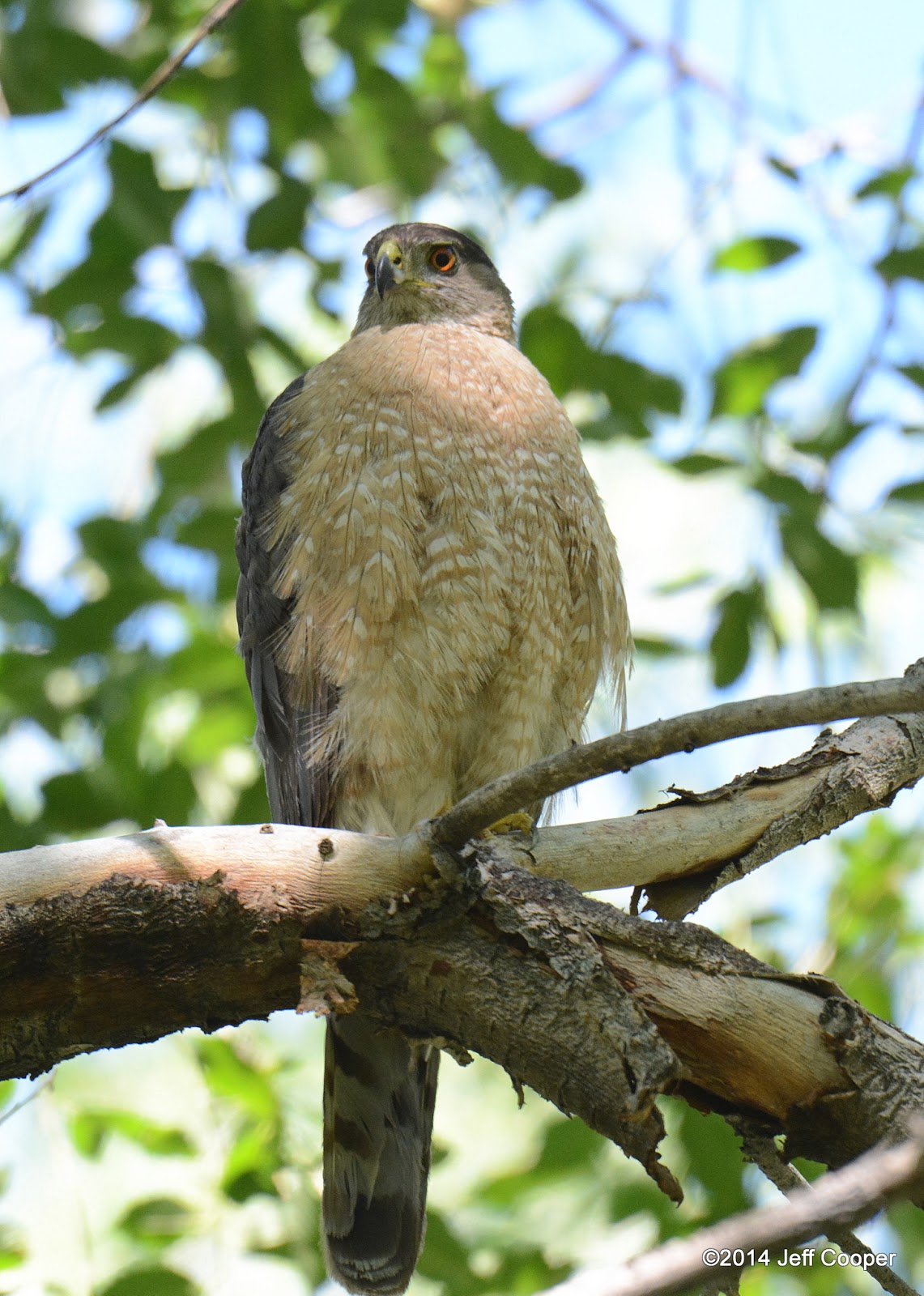
Utah has three major biomes--deserts, forests, and wetlands. Being able to enjoy the plants, wildlife, and scenery of each biome in a single day makes Utah a unique and wonderful place to live. For the past two Saturday mornings I have been able to leave home before sunlight to go explore some of the desert wildlife of Utah County with my friend Eric Peterson. Eric and I share a love for exploring the outdoors and photography so it's practically guaranteed we'll discover something fascinating to observe, enjoy, photograph, and share with others.
This past Saturday...
We were on our way to search for some Short-eared Owls in what we locally call the West Desert. It was about 6 AM when we noticed the rising sun was working its magic on the clouds behind us so we stopped to take a look.
 |
| Sunrise Seen From Cedar Valley in Utah County, UT |
We made our way to some desert farmland and quickly found our first Short-eared Owl of the day. He was perched on a stick at the edge of the road. He flew across the field and away from us before we were able to get a close look. We continued along the road where we got much closer looks at a female Short-eared Owl. She was standing on the edge of the road near some tumbleweed.
 |
| Short-eared Owl in Utah County, UT |
 |
| Short-eared Owl in Utah County, UT |
We saw a handful of these owls in the fields bordering the road. Some flew across the road a head of us and circled above us.
 |
| Short-eared Owl in Utah County, UT |
I'm still trying to figure out how to get my new 80-400mm lens to work as well as my previous 300mm prime lens when it comes to birds in flight so I didn't get the quality of image I desired for the flight shots. These two will suffice for now.
 |
| Short-eared Owl in Utah County, UT |
 |
| Short-eared Owl in Utah County, UT |
During one of our stops for photographs I decided to capture an image of the habitat through which we were passing. The first one looks north and the second one south. It gives a feel for where the Short-eared Owls were living and hunting. They simply need a place to roost/rest/nest, generally on the ground, and open spaces for hunting. These owls are much more active than other owls during daylight hours, but dusk and dawn are the ideal times to see them in the right locations.
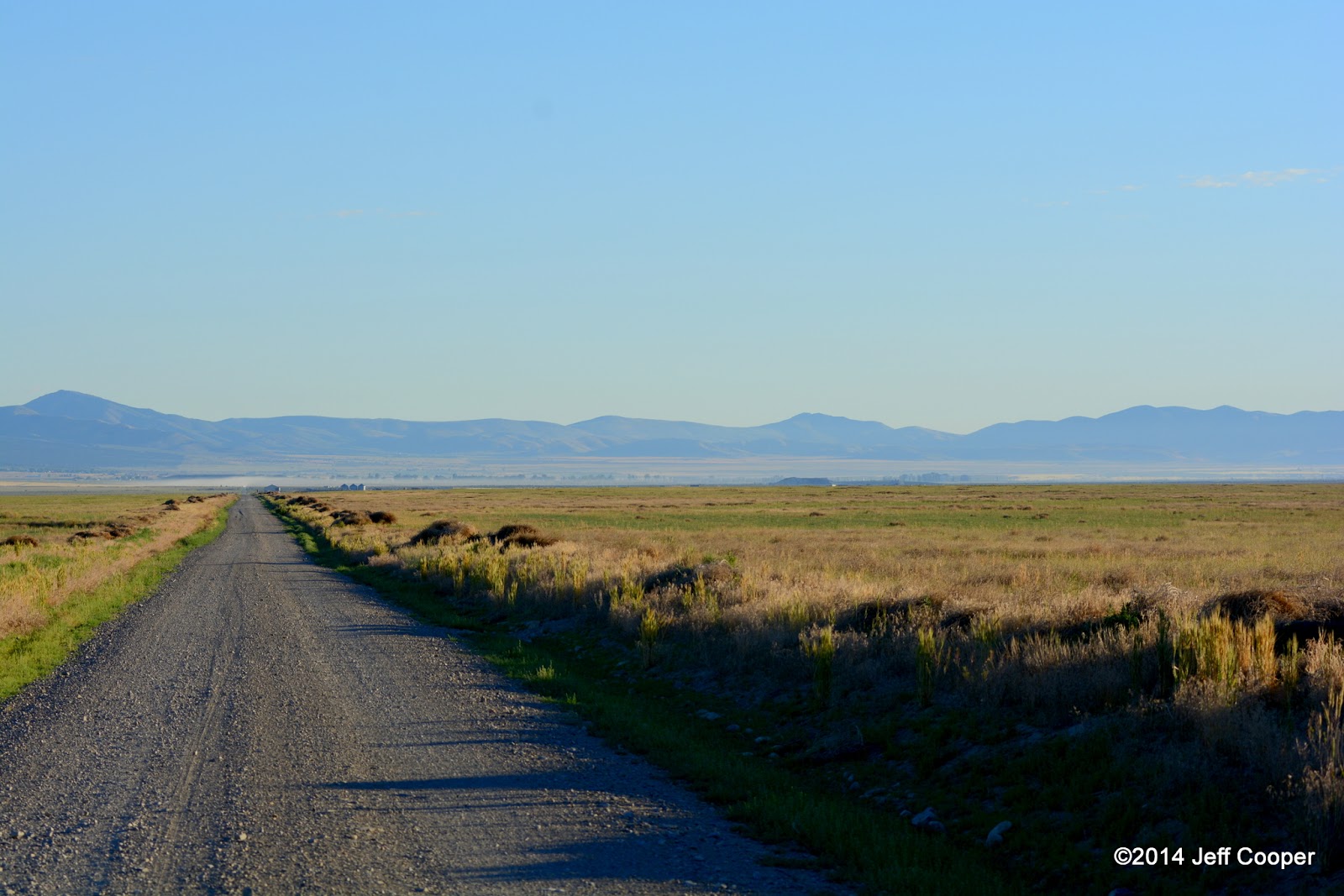 |
| Looking Northward in Short-eared Owl Habitat--Cedar Valley, Utah County, UT |
 |
| Looking Southward in Short-eared Owl Habitat--Cedar Valley, Utah County, UT |
There were Western Meadowlarks, loads of Horned Larks, Northern Harriers, and a family of Loggerhead Shrikes breeding and thriving in this habitat. Some Pronghorns were successfully raising young ones in the area as well. My reading has taught me that Pronghorns are not true Antelope. In fact there are no antelopes native to North America. However, locals refer to them as antelopes. We actually have a state park called Antelope Island in northern Utah. I guess Antelope has a better ring to it than Pronghorn Island State Park.
 |
| Pronghorn Family in Cedar Valley, Utah County, UT |
We discovered a number of raptors in the area, especially where we came across some trees or farm equipment and structures. One Prairie Falcon flew by early in the morning, but it was the number of Swainson's Hawks that I enjoyed. I've always wanted to get close looks at light-morph juvenile Swainson's Hawks. We ran across a few of them. One in particular allowed me a close approach and put on a bit of a show as it stretched its tail and left wing. Among Swainson's Hawks, only the young light morphs show the white head. As adults they all have dark heads. This one will eventually develop a dark head and a dark bib over the chest area.
 |
| Light Juvenile Swainson's Hawk in Cedar Valley, Utah County, UT |
 |
| Light Juvenile Swainson's Hawk in Cedar Valley, Utah County, UT |
 |
| Light Juvenile Swainson's Hawk in Cedar Valley, Utah County, UT |
 |
| Light Juvenile Swainson's Hawk in Cedar Valley, Utah County, UT |
 |
| Light Juvenile Swainson's Hawk in Cedar Valley, Utah County, UT |
 |
| Light Juvenile Swainson's Hawk in Cedar Valley, Utah County, UT |
After spending a little time watching the Swainson's Hawk we decided to try to focus on the Short-eared Owls again. As we were driving along the road I noticed some wings fluttering above the grass line of a field off to our left. We were curious to know what it was so we got out of the truck and walked toward the area. We expected a bird to take flight as we approached, but it was as if the bird we had briefly glimpsed suddenly disappeared. All we saw was an open field.
 |
| Cedar Valley, Utah County, UT |
We moved forward a little more and before we knew it we were looking down at a Northern Harrier Nest. It was completely unexpected and the first time either of us had happened upon a harrier nest site. There were at least four young birds present. All were sort of tucked inside grass and facing a central spot where the grass was pressed flat from roosting and feeding.
 |
| Fledgling Northern Harrier in Cedar Valley, Utah County, UT |
A Long-billed Curlew began calling from behind us. It flew directly over our heads as it continued to call.
 |
| Long-billed Curlew over Cedar Valley, Utah County, UT |
Looking back toward the nest I noticed the remains of what appeared to be a Kangaroo Rat. The blood was fresh so it was a recent kill and mill for the fledglings. Mom and dad were nowhere to be seen when we stumbled upon the nest site.
 |
| Remains of Kangaroo Rat at Northern Harrier Nest Site in Cedar Valley, Utah County, UT |
We left the nest site after a few images and continued our search for owls and raptors. We were fortunate to locate a total of four owl species for the day. We saw Short-eared, Great Horned, Barn, and a few Long-eared Owls.
We moved to a different location with a few trees and observed some type of moth caterpillar that was suspended in the air by a single thread that hung from a tree. I think you can call this an inchworm, but it was about three inches long. It will likely turn into a large moth. The sun was bright and washing out the subtle colors of the worm with the first few images I tried. I turned down the exposure compensation and it seemed to do the trick. A few of the images turned out okay with that change.
You can barely see the silky thread in the image below. What a colorful little worm/caterpillar with what appears to be some sophisticated anatomical parts. My understanding is, however, that these worms can destroy the foliage of trees in a hurry if not kept in check.
Another highlight from this past weekend was a family of Long-eared Owls. The young ones were curious about us. The adults were a little more guarded.
 |
| Juvenile Long-eared Owl in Utah County, UT |
 |
| Sibling Long-eared Owls Roosting in Utah County, UT |
 |
| Juvenile Long-eared Owl in Utah County, UT |
 |
| Secretive Adult Long-eared Owl in Utah County, UT |
Two Saturdays Ago...
Eric and I were exploring around the Soldier Pass Road area of the desert west of Utah Lake. One of our target birds was the Gray Vireo. They are very rare for northern Utah, but they are common in this small area of Utah County. It didn't take us long to hear and see several individuals singing from juniper trees.
 |
| Gray Vireo in Utah County, UT |
 |
| Gray Vireo in Utah County, UT |
Gray flycatchers were breeding in the area. We came across a male and female in one location after we parked and walked along a hillside.
 |
| Gray Flycatcher in Utah County, UT |
 |
| Gray Flycatcher in Utah County, UT |
We encountered a number of bird species expected for the desert that day. We knew that Common Nighthawks were breeding in the area. We saw many of them flying around us. Nighthawks nest on the ground so when we saw an adult bird acting like it couldn't fly and hopping along the ground ahead of us we knew we were near its nest site or young. We didn't see signs of either and simply continued our short wandering through the desert, careful not to step on or disturb anything.
Lizards are common in our desert, but I had never really paid them much attention while birding. I changed that when we came upon some adult Western (Great Basin) Whiptails. I enjoyed a short photo session with a couple of them as they moved between juniper trees. These lizards were about 10-12 inches long from nose to tip of tail.
 |
| Western (Great Basin) Whiptail in Utah County, UT |
 |
| Western (Great Basin) Whiptail in Utah County, UT |
 |
| Western (Great Basin) Whiptail in Utah County, UT |
 |
| Western (Great Basin) Whiptail in Utah County, UT |
The Utah County desert awaits you. Go and explore it. And be aware that what is amazing about nature can also hurt you. We do have rattlesnakes and some cacti and other plants will poke you so give proper respect and you'll have a great time.
 |
| Eric and Jeff After Exploring Utah County's West Desert |